ENGINEERING INSIGHTS

Precision Machining for Demanding Industrial Applications

Explore how CNC machining, dimensional control and manufacturing processes support the production of precision-engineered industrial components.

CNC Machining Dimensional Accuracy Quality Focus
Explore the Process
TECHNICAL ARTICLE 02
Precision machining at Pooja Industries
Precision Machining Industrial component manufacturing

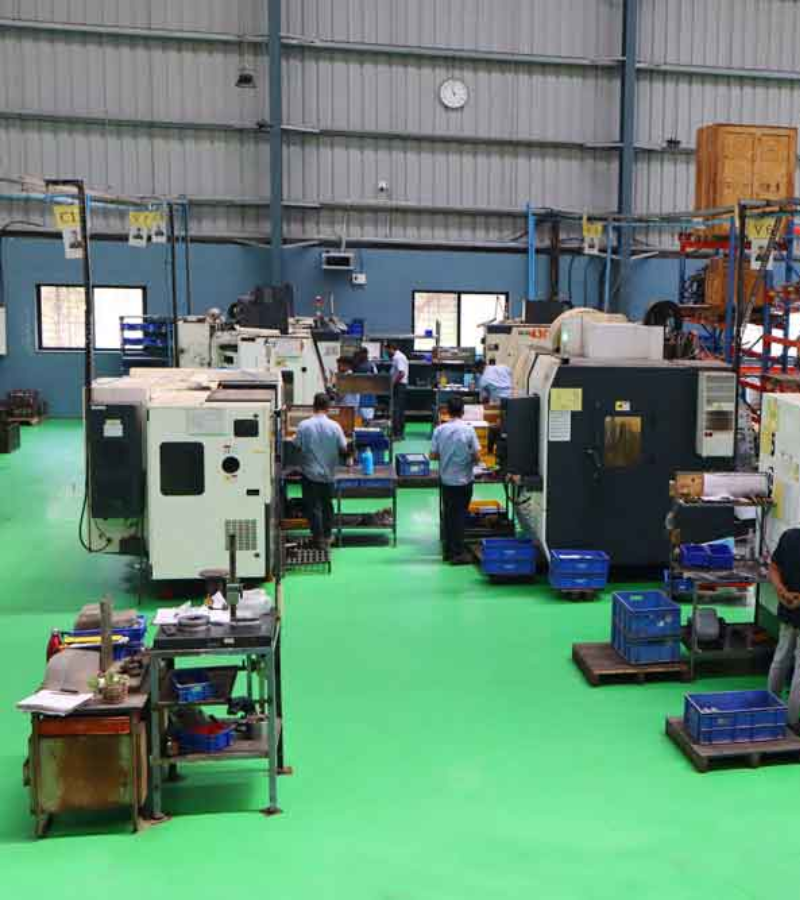
Precision Machining at Pooja Industries

Precision machining transforms raw material into components with specified shapes, dimensions and functional features. The process requires a suitable machining method, careful setup and attention to the component drawing.

Pooja Industries offers precision machining job work using CNC technology for industrial component manufacturing. Depending on the part design and production requirement, machining operations can involve turning, milling, drilling, boring and other processes.

Component geometry, material selection, tolerances and surface finish all influence the manufacturing approach. Understanding these requirements helps determine the appropriate process for the job.

THE MANUFACTURING OBJECTIVE

Accuracy starts with the component requirements.

Drawings, dimensions, material specifications and inspection needs help guide the machining process.

Key Processes in Precision Machining

Different machining operations are selected according to the geometry and requirements of each component.

01

CNC Machining

Computer-controlled machining supports the production of components according to programmed tool paths and part designs.

02

CNC Turning

Turning operations are suitable for cylindrical parts such as shafts, sleeves, bushes and pins.

03

CNC Milling

Milling is used to create faces, pockets, slots, profiles and other features defined by the component design.

04

Dimensional Control

Measurement against specified dimensions helps assess whether a machined component meets its drawing requirements.

PREVIOUS ARTICLE About Pooja Industries NEXT ARTICLE Tools & Dies

Why Accuracy Matters

Machined components often need to fit with other parts in an assembly. Dimensional variation, surface conditions and feature positioning can influence how components fit and function.

For this reason, the required tolerances should be clearly identified before production. The manufacturing process and inspection approach should then be matched to the actual drawing and application.

Dimensional Requirements

Identify critical dimensions and specified tolerances.

Surface Finish

Consider the finish required for fit, function and application.

Inspection

Check relevant component features against the supplied specifications.

A Requirement-Led Approach to Machining

Successful precision machining begins with a clear understanding of the component's drawing, material, dimensions and intended application. These details help guide process selection and inspection planning.

Where Precision Machining Is Used

Precision-machined components can form part of equipment, machinery and assemblies across a range of industrial sectors.

Automotive Components
Industrial Machinery
Oil & Gas Equipment
Electrical Equipment
Tools & Fixtures
Custom Assemblies

Looking for Precision Machining Solutions?

Share your component requirements with Pooja Industries to start a discussion about your project.